
Our first inkling that our ancestress Mary was a woman with stories to tell, was the moment we were puzzling over the fuzzy image of her daughter’s entry in the marriage register, and the words “reputed father” finally came into focus.
Let’s just back up a couple of generations, so we’re all in the same century: we’ve got an ancestor on the Weichmann side of the family named James Alexander MacLagan. The Reverend James Alexander MacLagan, to be specific. Together with his wife, Margaret Townsend, he immigrated to Chicago, Illinois from Scotland in about 1880. Here’s a picture of his gravestone, courtesy of a generous findagrave.com volunteer named Jim Craig:
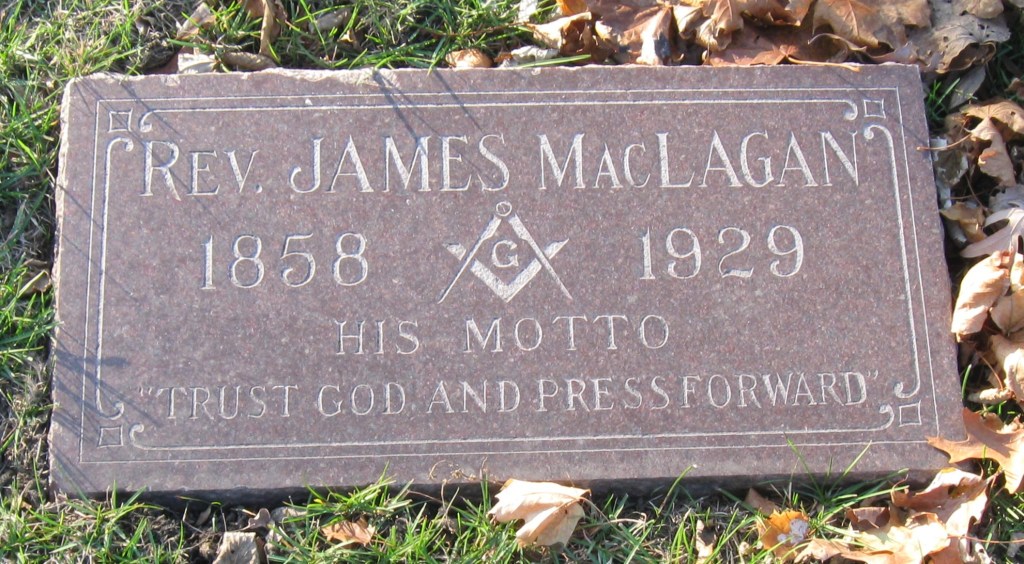
photo credit: Jim Craig
James MacLagan’s mother was named Elizabeth Taylor, and she originally came from a town in Perthshire, Scotland called Auchterarder. She married Thomas MacLagan in Glasgow, Scotland in 1857. Which brings us full circle, back to that marriage registry, and the extraordinary entry identifying the parents of the bride: “Mother’s name, Mary Taylor. Reputed father, Robert Sutherland”.
That moment of revelation occurred decades ago, and the cascade of questions dislodged by those simple penstrokes have only now begun to be answered, one little clue at a time. Last summer, with some expert research assistance from our friends at OldScottish.com, we were thrilled to discover that Mary Taylor was in fact our foremother’s married name. She was actually brought up with the maiden name Gardiner, sometimes given as Gardener.
At present, we still know precious little about Mary Gardiner’s early life and family ties.
However, we have learned a bit of her local history that’s worth noting, as it would have impacted on many relationships and loyalties in her town. Religion and church schism was an aspect of life in Auchterarder during the 1830s and 1840s that would have touched all residents in one way or another. In 1834, the citizens of Auchterarder Parish rejected the minister appointed by the Earl of Kinnoul, which caused no small degree of outrage in the larger community, and as other parishes followed suit, Auchterarder’s act of rebellion proved to be a significant factor in the fracturing of the Presbyterian Church of Scotland in the 19th century.
We have no way of knowing how Mary viewed these events, or how it may have impacted upon her daily experiences or relationships. But certainly it would have been a subject of animated discussion in the town, and the impetus for very visible changes in her community. One such change was the establishment in Auchterarder of a Free Church – one of the first in Scotland. The construction of their meetinghouse took place in the town during the 1840s, while Mary and her daughters were living there.
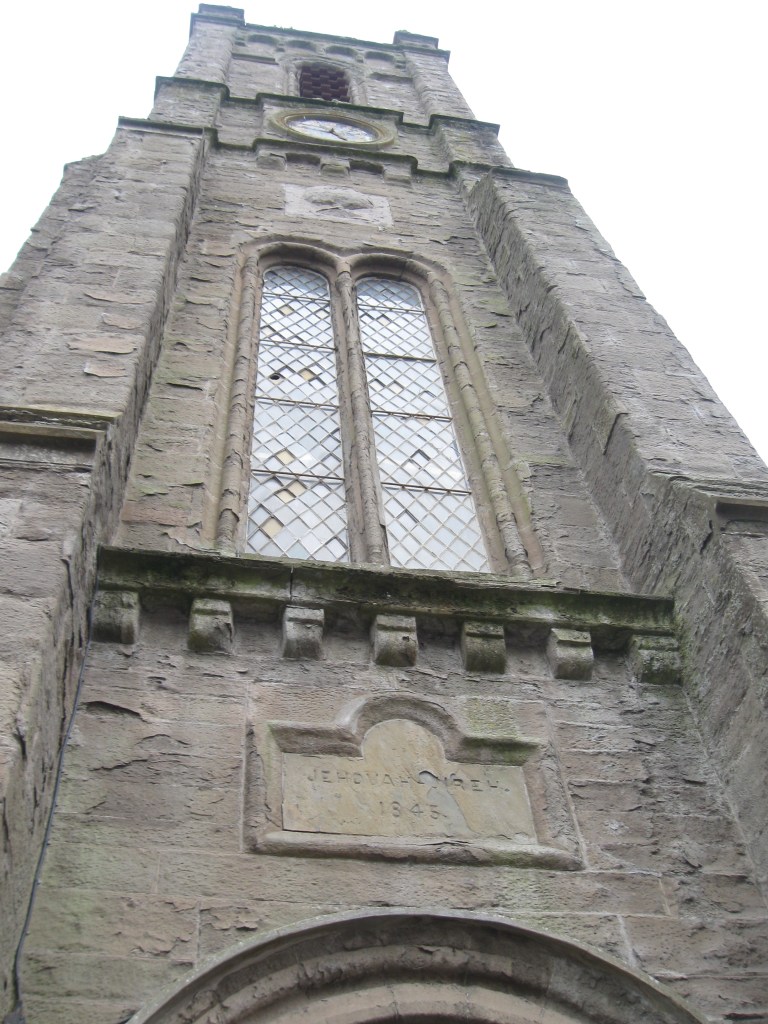
Thus reads the aged dedication stone still visible on the exterior of the landmark St. Andrew’s Free Church in Auchterarder, said to be one of the first Free Churches established in Scotland.
Construction began in 1843, while Mary and her girls were resident in the town, and they would have seen the impressive structure growing month by month until completion.
photo credit: Auralie Jones
So, against this backdrop of radical societal change, assertion of personal faith choices, and revolution of tradition, we find evidence of Mary Gardiner herself grappling with very personal choices, changes, and what was possibly a radical revolution in her own life.
In the process of applying for some economic support from her local church in 1838, and in response to “being seriously exerted [sic]to tell the truth and interogated” by the leading members of the committee responsible to decide upon her case, Mary Gardiner made a poignant declaration of her circumstances to a Kirk Session, regarding her brief and ill-fated marriage. She stated that “she was lawfully married to James Taylor weaver in April 1824, who left her nine months thereafter and has not since been heard of by her”.
On that same occasion, she also gives us intimate clarity regarding her relationship to another resident of the town, Robert Sutherland: “(She) further declares that she has had two children One in Novr 1834 and another in March 1837 And gives up as the father of both these her Children Robert Sutherland Shoe Maker Auchterarder”.
Robert Sutherland provided a statement as well, confirming Mary’s declaration and publicly acknowledging Mary’s children as his own. The girls were called by his surname in the 1841 census record, although they also used the surnames Taylor or Gardiner on other occasions.
Mary Gardiner, being already married to the absent James Taylor, never formalised her relationship with Robert Sutherland in marriage. By the time these statements were made before the Kirk Sessions in 1838, Robert was also married and living in another town.
Mary apparently raised their daughters on her own, working as a cotton weaver, sharing lodgings with another family, and living in the same town as her former lover’s extended family and other children.
What we don’t know about Mary Gardiner could fill volumes. But what we do know is that she lived in an extraordinary time, did extraordinary things, and made a bid to find happiness and love, the best she knew how. From her two daughters, Jane and Elizabeth, she leaves behind her the legacy of a vast and varied family of descendants, spread out across the world from Europe to North America and beyond.
– Auralie
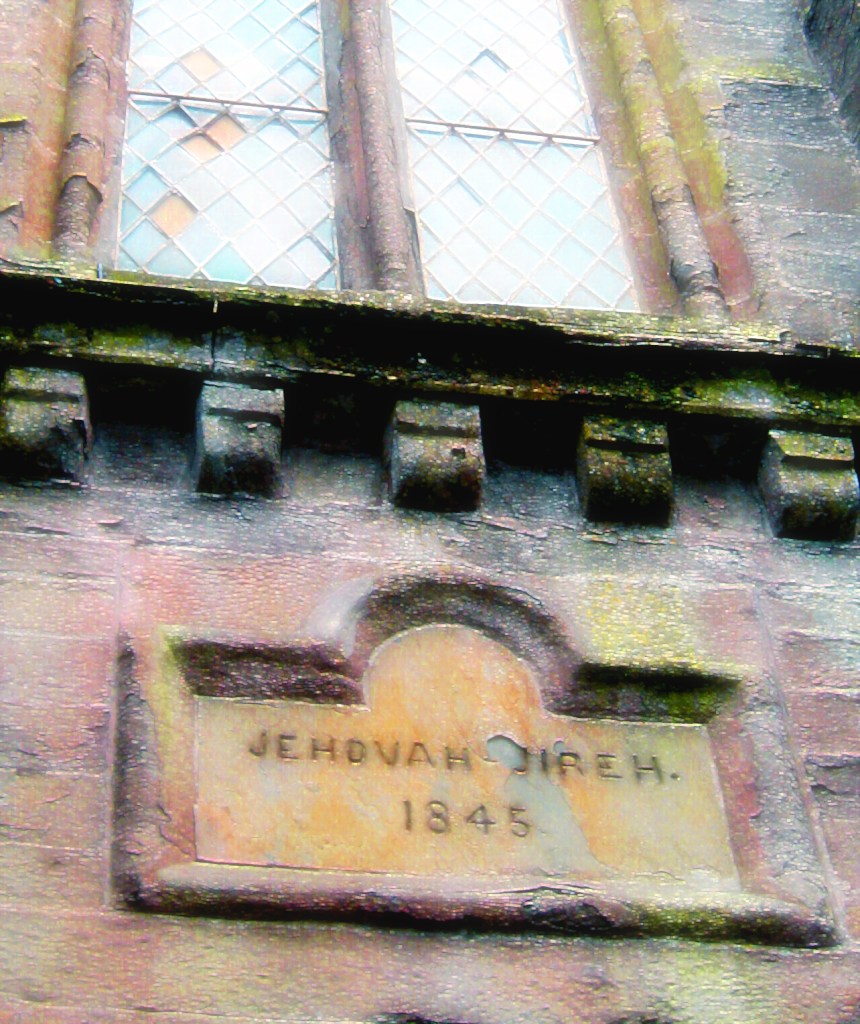
photo credit: Auralie Jones

 deadkeenfamilyhistory.news.blog